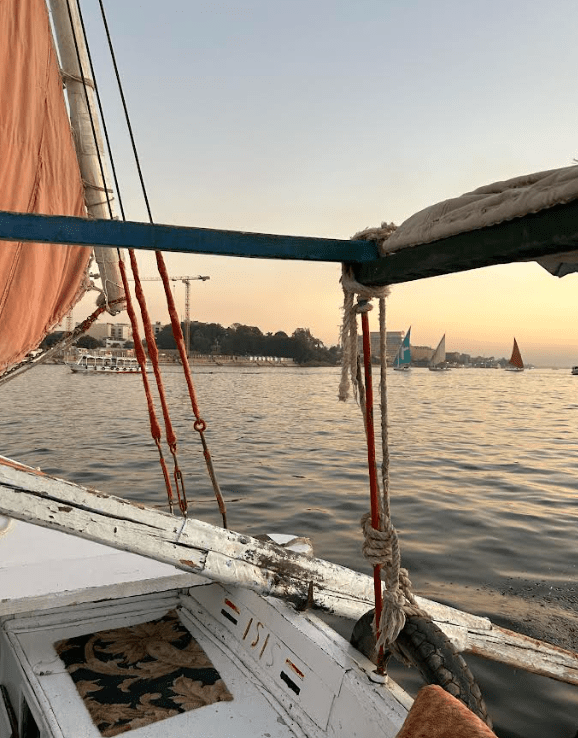
When I first saw the Nile River, I was awed by the beauty and activity it held. The felucca (sailboats) were not only taking families out on amazing trips, but were also transporting goods across and along the river. On the surface, it looked like life had been this way since the pharaohs, but I learned quickly that this way of life is being threatened by climate change. The Nile River, flowing from Uganda to the Mediterranean Sea in Egypt, plays a crucial role in water security for many industries, including farming. In Egypt, agricultural jobs employ 25% of the population. Threats to this river are not new; however, in this next century there will be increasing complications, given the threat of global warming.
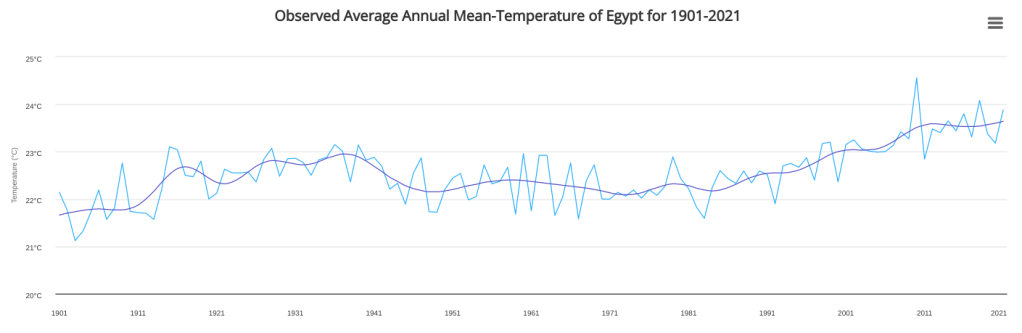
Across the country, farmers rely on water from the Nile to keep their crops healthy; however higher temperatures on the already water-scarce land will cause further drought. The average temperature has been consistently increasing as highlighted in this chart.
In addition, rising sea levels threatens Egypt’s delta, which has always been known for its fertile land. This delta, almost 100 miles, is where 40% of the population lives, and most residents have farms. These farms are significant contributors to feeding the country and providing goods for export and trade. The sea water, expected to rise a couple of feet over the next century, puts thousands of acres of this land at risk, as rising waters threaten to submerge cropland. If the land is underwater, millions of people would necessarily be displaced from their homes and this would create a multitude of problems for the Egyptian economy as a whole. However, they are also working to find solutions to these threats; this nation, which has also joined the Paris Agreement, has been ¨working towards a 2050 national climate strategy, which is based around the reduction of emissions in all sectors, and adaption to potential changes in the climate – in agriculture, water resources, coastal areas, and health.¨
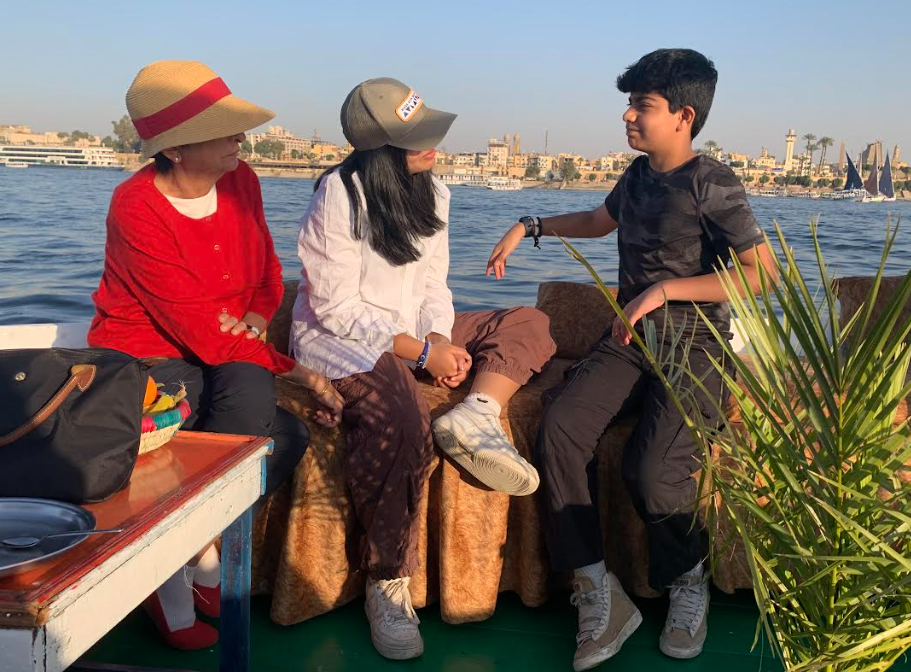
These changes are impacting everyday people who rely on the land for many purposes. During the trip I spent the day with Lesley Hammam, who shared with me that the government now controls which crops are being grown to help control water scarcity. Hopefully, the government, working in close collaboration with farmers and the citizens, can work to prevent exacerbating threats to the beautiful Nile.

 Navagations